

For those who’ve been reading the blog for a while, you’ll know that I spent a good portion of my time between 2020 and 2025 obtaining a Ph.D. in Personal Financial Planning. Among the great joys of learning, what I specifically focused on was understanding the business of money. In particular, the financial planning business and the curious relationship financial planners enjoy with their clients. You see, financial planners are a rare thing in that we work in the medium with which we are paid. Imagine a world in which you paid carpenters in lumber, oncologists in tumors, and law enforcement officers in crime.
It’s a curious thing then, that financial planners start their relationships with their clients on the “wrong foot.” That is to say, that not only do financial planners enjoy a less-than-sterling reputation in the marketplace for professional services, but also that upon being engaged by a client, they’re immediately set to a task: overcome the costs incurred by the client (e.g., a fee being charged) and provide greater value than the cost, both short and long term. So long as the financial planner can do that, then the abiding academic lens of Financial Planning Client Interaction Theory suggests that the client and financial planner will enjoy a long and fruitful relationship, particularly as other studies have found client retention rates among financial planners to be among the highest of professions, with most firms averaging 95% retention annually.
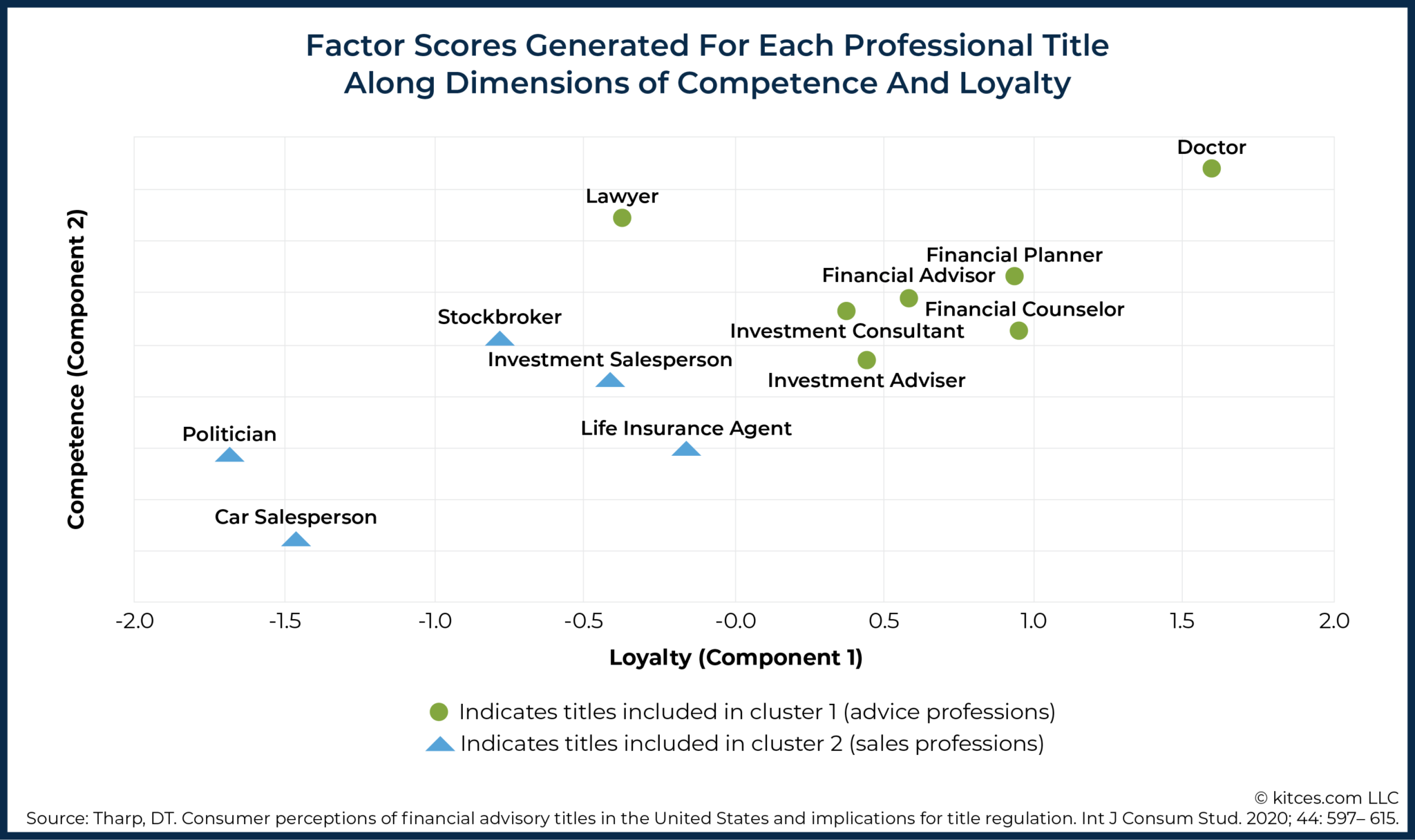
However, that puts potential clients in a tough spot. Research has found evidence that while clients do understand the fees they’re paying, many of those seeking financial planning services ultimately elect to work with the very first financial planner they review as an option. The difficulty of that spot is magnified when you consider that the average comprehensive wealth management firm has an annual minimum around $10,000. Which means that even though an engagement might only be billed monthly or may have no longer than a guaranteed term of a year, clients of such firms with industry average minimums and retention rates are notionally signing up for a 19-year relationship that might cost them $190,000. Which means, in turn, that not only must they be confident their financial planner will deliver that much value if not more for it to be worth engaging them, but also that they must notionally accept that cost with the value sight unseen at the time they decide to work with a financial planner.
So today, we’re exploring what theory and research have to tell us about how consumers select financial planners, but more importantly, how consumers can make smarter decisions about selecting their financial planner, and avoiding what Nobel Prize Laureat George Akerloff called “lemons.”
The Market for Lemons
We’ve referenced Akerlof’s work before in discussion the assorted theories of financial planning, so we’ll briefly summarize in one sentence: “The premium people will pay for a new car over a used car has less to do with the intrinsic qualities of the new car more than it does the value of avoiding problems that can occur with used cars.” Applied to the world of financial planning, this can be a bit of a dangerous assumption. People often use a premium price as an indicator of quality, and in some environments that can be true. For example, someone looking to avoid a crowded resort experience might opt to stay at the Ritz Carlton; not only because it has a strong reputation, but also because the degree of expensive that it is means less people can afford it and thus less people will consume it.
The study of luxury goods suggests that part of the quality provided by a luxury good is its finite and scarce nature. If less people can own an Aston Martin DBR1 because it costs $22.5 million dollars, it must therefore be good, right? Well, it’s a lovely notion, but the problem is somewhat inverse in a marketplace where the service purchased and the costs of the service are inextricably linked. It’s one thing to pay a premium for the top heart surgeon in the world, in which you exchange money for high quality healthcare; it’s another thing to pay a premium for financial advice when that advice is difficult to assess both ahead of time and even after the fact.
You see, financial planners are classified as “credence claim” service providers. Essentially, they must offer something invisible that is difficult to assess ahead of time and even difficult to assess after the fact. You trust this professional’s marketing signals such as their brand (“MY Wealth Planners”), professional credentials (“Ph.D. in Personal Financial Planning, MBA, CERTIFIED FINANCIAL PLANNER PROFESSIONAL®, Chartered Financial Consultant, Accredited Investment Fiduciary”), and experience (“11 Years of Experience”) as reasons to trust that they can deliver on their offering. But then, you are placed in a difficult position: do you get what you paid for?
While there’s a basic economic version of this, where X is cost and Y is value and you experience X < Y, and therefore you find the service valuable, the question is whether that outcome or the inverse (X > Y) is really the responsibility of the financial planner. For example, if you spend $10,000 on a financial planner this year and the market goes soaring up by 30% on your million dollar portfolio, so you make $300,000 (or $290,000 net of the fee), does the planner get credit for that? Conversely, if the planner builds you an excellent financial plan that reduces your risks and slashes your tax bill by $30,000, but then the market tanks 30% and you lose $300,000, netting $270,000 for the savings and then still having to pay $10,000 for a total annual loss of $280,000 on your original million dollars, is that the planner’s fault?
Quality Markers
So, with the issues of lemons and credence claims known to you, how does a savvy consumer go about ascertaining whether a financial planner is a good option for them? Or rather, how do they suss out the lemons and avoid them in the first place? After all, as Akerlof showed us, the premium you pay for quality is less about the quality than it is about avoiding the bad options out there. First, let’s discuss markers of quality, then we’ll discuss signals that a service provider might be a lemon. There are a few popular signals of quality, but keep in mind as we discuss these that they are only signals, not guarantees.
The first and most well-known signal of quality is the CFP® Certification. Because CFP® Professionals must meet the 4-Es: Ethics, education, experience, and examination, and also because the CFP Board spends over $27 million annually on public awareness campaigns, it is becoming well-recognized as a baseline marker of competence in the profession of financial planners. It has even been argued, going all the way back to the late 80s, that the public should recognize only those who hold the CFP® Certification as financial planners (“One Profession, One Designation”). While neither title protection nor licensing protections exist for financial planners to make that the case today, it’s been of growing interest to the public, and as financial education and content have become more prolific, “It’s Gotta Be a CFP” as the CFP Board would like to put it.
The second popular signal of quality is the fee-only compensation model. Institutions ranging from the Wall Street Journal to the Department of Labor have made repeated arguments via articles or actual regulations that financial advisors of all stripes should offer their services with as few conflicts of interest as possible, and preferably with a fiduciary obligation to their clients. The fee-only compensation model can vary in nature, including hourly fees, percentages of assets, net worth, or income, or include subscription -based fees or one time project fees. What materially differentiates the fee-only compensation model is that not only does it prescribe that the firm’s sole source of revenue should be fees directly and explicitly paid by clients, but also that offering such services under the regulatory scheme of the Investment Advisers Act of 1940 obligates such a service-provider to do so under a legally binding fiduciary standard. Nevertheless, defining that standard has been the source of much debate, but NAPFA, the National Association of Personal Financial Advisors, which is the national association of fee-only financial planners, defines the fiduciary obligation of fee-only financial planners as shown here. Succinctly, their duties include duties of care, loyalty, competence, compensation, and engagement.
A third signal is perhaps a bit more difficult to identify at face value, depending on the degree of transparency shown in mediums such as website content or marketing materials, but the basic premise is this: Is the financial planner willing and able to explain exactly what they will do for you and exactly how they will get paid to do it? This doesn’t necessarily mean that the planner owes you a 92-point checklist of planning subject matter they’ll complete, or that they’ll be able to tell you down to the penny what their services will cost over the next 30 years, but you should have a very clear understanding of what their service model is and how they’ll be paid for it. The importance of these two factors seem obvious, but let’s dig in just a bit. The importance of service model clarity comes from the obvious premise that this is the value you will receive: I will be paying you for [this service model]. Consequently, planners have an obligation to transparently and clearly articulate what it is that you are buying from them. In turn, when you aim to understand what you’ll be paying, it’s less important that you know it will cost $13,912.72 in 7 years, than that you understand what the fee is, how it is calculated, what makes it go up or down, and most importantly, whether you believe and reasonably understand that the fee aligns to the incentives you want your financial planner to follow.
That last point is perhaps the most important one. You can work with a CFP® Professional. You can hire a fee-only financial planner. You can get a great understanding of their service model and how they intend to deliver value to you. However, Charlie Munger put it best: “Show me the incentives and I’ll show you the outcome.” Whether your future financial planner will readily admit it or not, conflicts of interest are what they are. They incentivize behaviors and advice for a reason, so it is critical that you believe their compensation structure, and therefore their incentive structure, aligns to the type of service you intend to receive from them, and therefore that the value you receive is well aligned to how you pay, and thus you can reasonably believe that their incentivized behavior will align with the value you are trying to buy.
Lemon Signals & Avoiding Them
With some popular quality markers out of the way, and keeping in mind that they are again, markers but not guarantees, let’s turn to some fairly obvious signs of a lemon. Fortunately, much like a grinding sound when you turn on the car or a rusty side panel, there are often far more signals to indicate something is a lemon than there are signals that something is *not* a lemon. Much like the scientific process, it’s much easier to disprove the quality of something than it is to prove the quality! So, let’s list off some of the most common signals that you need not engage with a financial planner:
Absence of the CFP® Certification: In the search for a financial planner, and notably, not necessarily the search for an insurance broker, lawyer, tax professional, or portfolio manager, there is no more obvious sign of incompetence than the absence of the CFP® Certification. Keep in mind what we said before, that the presence of the CFP® Certification is a signal of quality but not a guarantee. But in turn, the absence of the CFP® Certification can only signal bad things: a lack of experience adequate to hold the marks, a lack of education adequate to hold the marks, the inability to pass a comprehensive exam on financial planning, or disqualification to hold the marks due to ethical issues. That doesn’t mean you can’t work with a financial planner working as part of a team with a CFP® Professional on it, where your specific advisor isn’t a CFP® Professional but your plan is built and supported by a CFP® Professional, but if there’s no CFP® Professional in the picture, you’d be highly advised to look elsewhere.
It’s noteworthy that some of my professional colleagues will send up an outcry at this statement. “Dan, there are lots of really great really smart people who are starting their own firms or who have lots of advisory experience but who just never go the CFP® Certification.” It’s a fair outcry, but let me explain why I discount such arguments. For those who are really great and really smart who start their own firms, I simply can’t ignore that they are doing so in the absence of any experience as a practicing financial planner. In fact, I argue quite strongly against the eligibility of people without experience to start their own practices, because without experience, how can they begin to satisfy the duties of care or competence for their clients? “You’re my very first client and I’m by myself, so I hope I don’t mess up your financial future!” In turn, for those very experienced financial advisors who simply never picked up the CFP® Certification, let me ask a different but simple question: “What are you afraid of?” The argument you hear from these folks is often that they’re so excellent and experienced that they don’t need the marks. I’d love to agree with them, but having had the displeasure of working with a decade-plus experienced financial advisor who it turned out knew less than nothing about financial planning, I can’t say that experience is on its own a marker of much. It turns out it doesn’t matter if you have decades of experience at something if it turns out you’ve spent decades doing it wrong!
Proprietary Products: This one is fairly easy to call out. Is the name of the financial planner’s firm and the name of the financial products they recommend to you the same? While this creates some oddities, for example, Vanguard creates both great financial products and also offers financial planning, this is a case where the exception proves the rule. There is only one Vanguard in this argument, and while you might point to some low cost index funds offered by Fidelity, Charles Schwab, or other brokerages, the distinct difference is that Vanguard built its reputation on low cost no frills products for decades before it ever got into the financial advice business, and in turn, it has generally done a pretty good job of keeping its products and services low cost and low frills.
As for the rest of the world, we have to be reminded as with the CFP® Certification or its absence that the absence of proprietary products is only meaningful for financial planners. You should not be shocked or horrified to find that if you go to the deli that the deli sells deli meats. Thus, if you meet an insurance agent from a specific insurance company, you can be fairly certain that they will gladly offer to sell you products from that company, and frankly, that’s fine. The place where we get into trouble is when agents of the insurance company or brokers of the investment firm tell you that they are offering you objective and conflict-free financial planning and advice, only to miraculously tell you that the cure for your financial woes is solely products from their product company’s lineup. As the old saying goes: “Never ask a barber if you need a haircut.”
This doesn’t mean you can’t buy a financial product from a broker or agent who represents the company from which the product is produced. It can very well be the case that XYZ Insurance offers the best homeowner’s or life insurance policies for your given need, and that an agent from XYZ Insurance is the only person who can help you purchase that policy. However, judgment about whether you actually need that policy or any other financial product should first be vetted by a professional who is impartial to whether you purchase any specific product or make any particular investment. The alternative when that’s not possible (e.g. you’re not able to afford or you otherwise don’t have an existing engagement with a financial planner) is to simply know what you’re buying in the first place. “I need a 20 year term policy to protect my newborn as they grow up, that’s all I’m buying.” You get the idea.
It’s “Free”: This should go without saying, so we’ll keep it succinct. When an advisor, planner, agent, or broker tells you their services are free, you should run for the hills. As the observation has long applied to social media, “If you’re not paying for the product, you are the product.” In this case, any financial professional telling you that you don’t have to pay them is not doing this work for free and is getting paid. The most commonplace example of this is commissions on investment and insurance products. To be clear, there’s nothing wrong intrinsically with those commissions; many financial products simply don’t exist in any other medium. Do we think that most commission-based products aren’t ideal in a financial planning context? Sure, but the marketplace for products like home and auto insurance is built on a commission-based and insurance-trails business model, and while we’re starting to see the slow emergence of no-commission or fee-based insurance products, the vast majority are still sold on commission, and frankly, many of the commissionable products are still better than the no-commission products.
We expect that we’ll see the marketplace for no-commission products and fee-based products expand over time, particularly as insurance companies and investment companies get more interested in recurring revenue rather than one-time transactional revenue or otherwise repeated transactional business. However, in the interim period, the primary question is simply this: is the person you’re receiving services from open about how they are paid, or are they pretending they have no financial interest in whether you do or do not work with them? It used to be the case that some professionals could describe themselves as salaried in the world of CFP® Professionals, and while that was technically true, it was misleading to the clients because that was how the individual financial planner was being paid, not how the client was paying for their services. Disclosure around compensation now reflects the requirement that financial services professionals explain their compensation in terms of how the client pays for their services, rather than how the professional individually is paid. If you’re not getting a clear answer up front, you’re probably not going to get a clear answer later on down the line, and by then it might just be too late.
Products Before Process: There’s a popular analogy used in financial services to explain this problem. Imagine you went to a doctor and the very first thing they said to you wasn’t “Hello.” or “How are you feeling today?” or “What brings you in?” But instead, they started by saying: “You need Believra™.” No questions, no exam, no tests, no symptoms, no diagnosis. Just “You need Believra™.” Then, when you questioned that advice, they simply told you that no matter what questions you asked, problems or symptoms you described, or concerns you raised, they simply repeated that Believra™ was going to solve that problem.
We think you’d probably be right to be skeptical, no?
Believe it or not, this is the predominant business model in financial services. You go to XYZ Advisory Services, and they are here to sell you XYZ Product or XYZ Service, whether it’s a fit for your needs or not. You can sometimes see this coming when you go to a firm’s website and find that all of its descriptions and services describe one or two very specific financial products, such as whole life insurance, structured notes, or other financial products. If you find yourself walking into such a place, then we return to our deli analogy earlier; you’ll get what you expect to get.
But if you find yourself sitting across the table from someone you’ve just met, and they steer the conversation to specific products or specific services to solve your financial issues without actually learning more than your name beforehand, then you’re experience a products before process firm, and that’s probably a sign that any plan that might follow will only exist to reinforce the firm’s mission that you buy that specific product. We’ve seen examples of this before, such as reviewing a “financial plan” generated by an insurance agent from a major life insurance company that arrived at the sole conclusion that a person without a spouse, children, or other dependents should invest all of their free cash flow in a permanent whole life policy.
There’s Always a Risk
No matter how many positive signals you see or red flags you avoid, you can still end up with a less-than-ideal fit. You can hire a CFP® Professional who isn’t all that competent or works for a product company, you can get an unethical fee-only financial planner, or find yourself working with a firm that you thought was transparent, only to discover that you didn’t fully understand what you were signing up for. You can even find yourself at the financial products deli hungry for the whole life pastrami. Ultimately, you can only approach the relationship you look to establish with a financial planner with a reasonable degree of caution and with the aim of validating positive qualities and trying to avoid more obvious negative qualities.
At the end of the day, what’s important is that you feel comfortable with the services offered, that you understand what they are and how you’ll pay for them, and that you’re willing to speak up and advocate for yourself when you feel there is a gap between the expectations that were set at the start and the outcomes you’re experiencing. No one is more responsible for getting what you want out of a professional relationship than you are, but it certainly helps to work with professionals who support you in that endeavor from the start.

Dr. Daniel M. Yerger is the President of MY Wealth Planners®, a fee-only financial planning firm serving Longmont, CO’s accomplished professionals.
Comments 1
Good advice for those who have the “bandwidth” to firstly ferret out what to look for in a good financial planner and have the wherewithal to do the due diligence required. Many, if not most, of us do not have that luxury and must grasp for what is at hand and hope for the best. Granted, it hasn’t worked for me! My landing in your office was luck, plain and simple.
As good as your advice is for researching a decent financial planner, I am not sure many of us have the wherewithal. If it weren’t for ChtGpt I would not be able to compare roofers, or window well cover people or hypoallergenic shampoos! For someone like me, it’s just too complicated and time consuming. How is ChtGpt in evaluating Financial Planners, I wonder? . . .Still, I appreciate you!
P